A comprehensive guide to cyber insurance
Every business owner should be aware of—and take action on—the risk of cyberattacks. The potential continues to grow steadily as cybercriminals find new and better ways to breach digital defenses. Because of these evolving risks, having cyber insurance is essential.
Insurance for cyberattacks and data breaches protects your business financially in the face of the many methods cybercriminals use, including:
- Phishing attacks using emails that appear to come from trusted sources
- Ransomware attacks that “lockdown” the victim’s computers or networks—and threaten to release the data unless they pay a ransom
- Monster-in-the-middle (MITM) attacks that involve a cybercriminal illegally viewing data sent between two people, computers, or networks
- Brute force attacks where a “bot” rapidly tries a long list of passwords to gain access to a computer or network
And cybercriminals don’t just target large companies.
The belief that only organizations with “deep pockets” are victims of cyberattacks is understandable. However, some cybercriminals focus on small businesses, feeling they have fewer cybersecurity resources and their network and computer defenses are easier to breach. Consequently, securing data breach protection for small businesses from a reliable business insurance provider is a critical step in addressing these risks. This is where cybercrime insurance proves its worth.

Why small businesses are high-risk targets
As noted above, it’s common to think hackers only go after big corporations, but the reality is different. Cybercriminals often see small businesses as easier targets because they typically have fewer security resources than major enterprises. This makes smaller operations a favorite for automated attacks, such as ransomware and phishing schemes, and it’s why cyberattack insurance is so important.
For small business owners without a dedicated IT team, a cyberattack can feel overwhelming. You don't need to be a tech expert to see the value of a safety net. Cyber insurance helps preserve customer trust and keeps your daily operations running when systems go down, ensuring you can bounce back quickly from disruptions.
Cyber insurance: vital financial protection for your business
It goes without saying that the least damaging cyberattack is one that fails. Small businesses should do all they can to protect their networks, computers, and other devices from illegal access. But cybercriminals are relentless, and breaches occur even in the most carefully controlled environments.
Fortunately, biBerk offers another layer of protection from cyberattacks: cyber insurance. biBerk cyber insurance for small businesses acts as a critical fail-safe when prevention isn't enough. It provides your business protection against cyberattacks—financial protection, that is—when a hacker steals sensitive information by gaining access to your network, computers, or other devices, steals sensitive information, and uses it to commit fraud or is likely to do so. It can also cover the accidental release of sensitive information.
Read on to learn more about this crucial coverage, including what it covers.
What is Cyber insurance?
Also referred to as cyber liability insurance, cybersecurity insurance, and cyberattack insurance, cyber insurance covers costs related to the compromise of sensitive data from a successful cyberattack.
Imagine you arrive at work one morning and discover someone has hacked into your computer network and stolen sensitive customer information. This might be credit card numbers, Social Security numbers, or other information a criminal could use to make unauthorized purchases and commit other types of fraud.
Immediately, you know you’ve got to take action to minimize the impact of the breach, including:
- Notifying your customers about the incident
- Providing customers with informational materials to help them protect themselves in the wake of the breach
- Setting up a “helpline” people can contact for guidance and support
- Arranging credit report monitoring for affected customers
- Preparing for potential lawsuits from customers (and later, paying for things like your legal defense and damages awarded)
All of these actions have costs, and the sum can be significant. Without biBerk cyber liability insurance, your business must pay these expenses. But when you have coverage from biBerk, these services are covered after a data compromise.
Why do businesses need cyber insurance?
Standard insurance policies, like general liability, rarely cover digital threats. If you don't have specific cyber insurance coverage, your business ends up paying out of pocket for data breaches—costs that include ransom demands, lost income, and legal fees. Cyberattack insurance closes this gap, giving you the funds and cyberattack recovery solutions needed to navigate a crisis.
What does biBerk Cyber insurance cover?
Cyberattacks can have wide-ranging consequences. While there are different types of cyber insurance on the market, biBerk cyber insurance policies provide cost-effective protection from the most common costs of data compromise from a cyberattack. With this add-on, we can pay incident response expenses (up to your policy limit) when a covered event happens.
Your biBerk cybersecurity insurance policy addresses what are called response costs, which are categorized as first-party and third-party expenses. Understanding first-party vs third-party coverage is important.
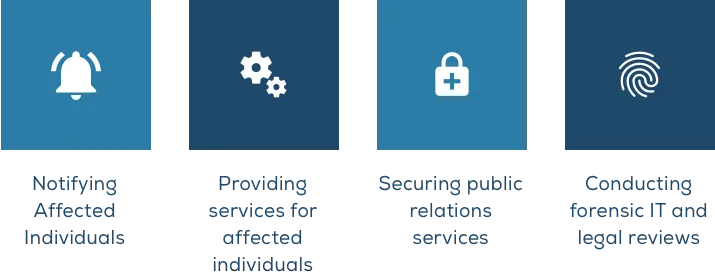
First-party response expenses are the costs your business pays directly. When you add cyber coverage to a general liability or business owners policy, this includes:
- Notifying the people affected
- Helping victims recover—for example, by setting up a helpline, paying for credit monitoring, and managing identity restoration
- Hiring PR pros to protect your reputation
- Bringing in IT forensic experts and legal teams to see what went wrong
Third-party response expenses (incurred by others or related to their losses) are your legal defense and your liability costs—meaning money a court orders you to pay to customers. This protects you if customers or vendors sue you for things like credit card fraud, system hacks, or security failures.
We base your specific coverage on the policy you attach it to. For instance, you get help with first-party response costs when you add cyber insurance to general liability or a BOP. If you want coverage for third-party liability expenses, that applies when added to general liability, a BOP, or professional liability insurance.
If you’re an operations manager or anyone focused on addressing business risk, you likely recognize that this coverage is a core component of organizational resilience. It goes beyond simple reimbursement, supporting your ability to meet strict compliance expectations and manage legal exposure. Having a policy in place connects you with the expert incident response structure needed to handle breach notifications efficiently.
What does biBerk Cyber insurance NOT cover?
As noted above, biBerk cyber liability insurance protects businesses from the most common data compromise costs. Other expenses that can result from a breach and are not covered by our cyber insurance include:
- Business interruption losses. This is lost income from a temporary halt in business operations caused by a cyberattack.
- Technology errors and omissions claims. These are claims by customers because they are unable to access business services due to a cyberattack that has prevented a business from performing.
- Dependent business interruption losses. This includes things like interruption of services from a third-party provider due to the failure of the insured’s network.
- Cyber extortion losses. These are losses such as payments to keep cybercriminals from releasing sensitive stolen data.
- Payment card liability. This liability is related to the improper handling and protection of payment card data (so-called PCI or DSS compliance).
- Regulatory defense costs. These are legal fees to defend the business from accusations it violated regulations such as for safe handling of credit card information.
- Data recovery costs. These are expenses related to retrieving data.
- Stolen funds. This means replacing money stolen by a cybercriminal.
- Telephone fraud. This refers to losses from an employee providing sensitive information to someone in a phone call.
- Fraudulent instruction. This is when an employee follows directions provided under false pretenses by a third party.
- Funds transfers. This is money moved electronically into the possession of a cybercriminal.
- Criminal rewards. This is money offered for information on a cybercrime and those responsible.
- Cybersecurity enhancements. These are costs related to upgrading cyber defenses to prevent future attacks.
It’s essential to understand precisely what a biBerk cyber liability insurance policy covers and doesn’t cover. If you are unclear about any aspect of biBerk coverage you have or are considering, you should talk with one of our licensed insurance experts.

What does a Cyber insurance policy cost?
biBerk cyber insurance provides cost-effective protection from expenses related to data compromise from cyberattacks—especially when you think about the potential financial and reputational damage from an incident. Remember that your business faces immediate costs to address the breach but also the risk of long-term harm if you don’t have the resources to manage an incident promptly, completely, and to your customers’ satisfaction.
A biBerk cyber liability insurance policy costs $85-$200 per year (on average) for base coverage. Based on the policy to which it’s added, it can provide $50,000 for response expenses and $50,000 for defense liability. And our cyber insurance coverage comes with low down payments.
We also reduce the time required to respond to a breach by enabling you to report a claim quickly and efficiently online. The last thing you need when dealing with a cyberattack is a complicated claims process!
Get an instant, self-service, online quote to determine your cyber insurance cost.
8 steps for protecting your business from cyberattacks
You can reduce your company’s risk of being a victim of cybercrime—and the need to report a cybercrime insurance claim—by taking these steps:
- Create a cybersecurity plan. It can be as simple as a document with guidelines for keeping your devices, network, and data safe. You can also find templates for more detailed documents online, such as the Federal Communications Commission’s Cyberplanner.
- Evaluate your cybersecurity strategy regularly. Follow an internal checklist, use the services of a cybersecurity company, or get a free vulnerability scanning through the U.S. Cybersecurity and Infrastructure Security Agency (CISA). Even with a strategy, having cybersecurity insurance is essential.
- Defend your technology. Use data encryption wherever and whenever possible, implement an internet firewall, password-protect your routers, etc.
- Use multi-factor authentication where appropriate. Require users to do more than enter their user ID and password to access a system. For example, you can have them enter a code sent to their phone to complete the login process.
- Keep your antivirus software updated. Cybercriminals continually modify their viruses, so it’s crucial to have the latest antivirus software active at all times.
- Back up sensitive data. You should have strong data security measures in place, provide access only to those who need it, and maintain a copy of your critical data in a safe location.
- Ensure remote employees can share data securely. If team members collaborate remotely and their work involves sharing sensitive information, ensure they can do so safely, such as through a secure cloud-based data-sharing service.
- Educate your employees. People using your computers and other devices must understand the importance of not clicking on links in emails, avoiding suspicious downloads, using strong passwords, etc.
What businesses need cyber insurance?
If you use email, store client records, take credit cards, or rely on cloud software, you likely need this protection. It is especially important if you hold sensitive data like Social Security numbers or medical history.
From local retail shops to medical offices and contractors, almost every modern industry is now exposed to digital risks. Because these threats don’t discriminate based on size, securing cyber insurance for startups and growing businesses is just as critical as it is for established enterprises.
Even with robust technical controls, tech-forward startups face unique exposures from cloud environments and SaaS dependencies. Cyber insurance acts as a strategic layer that complements your security efforts, limiting the financial impact of vendor vulnerabilities. This protection is vital for safeguarding the digital assets and intellectual property that drive your business growth.
Frequently asked questions about Cyber insurance coverage
Below are some common questions and answers about cyberattack insurance.
What types of businesses need cyber insurance?
Cyber insurance coverage for companies handling sensitive data is a must. In today’s digital world, that is nearly all companies. Sensitive information includes credit card numbers, Social Security numbers, health or medical records, or any other information a cybercriminal could use to commit fraud.
What does cyber insurance cost?
biBerk cyber insurance costs $85-$200 per year on average for base coverage, which includes $50,000 for response expenses and $50,000 of defense liability.
How does a cyberattack insurance claim work?
You can report a cyber insurance claim on the biBerk website. Our claims team will then connect with you and guide you through the process.
What does biBerk cyber liability insurance cover?
Our cost-effective cyber insurance protects your business from the most common costs of a data compromise from a cyberattack, including forensic IT review, legal review, notification of affected individuals, services for affected individuals, public relations services, legal defense expenses, and third-party damage claims. Coverage is based on the type of policy to which you add cyber insurance. Contact us for details.
What does biBerk cyber liability insurance NOT cover?
Certain costs don’t fall under our cyber insurance coverage, including system outage damages, business interruption, PCI/DSS compliance violations, extortion, stolen funds, and others. Contact us for details.
Trust biBerk for crucial Cyber insurance coverage.
Securing the right cyber liability insurance coverage offers many benefits—from financial and reputational protection to peace of mind. When you buy cyber insurance from biBerk, you get a great balance of coverage and price in business insurance you can count on. You also get the confidence of knowing we’ll address covered incidents promptly and thoroughly.
biBerk is part of the Berkshire Hathaway Insurance Group, a trusted name in business insurance that has helped business owners protect their companies for over 75 years. Just as importantly, our friendly and knowledgeable team members are eager to assist you in finding the right coverage and to help you recover if your company suffers a cyberattack.